

There will still be companies as clients. As a research company, we can make an important contribution to product development and problem solving.
Marcus Keding, Managing Director Research Burgenland
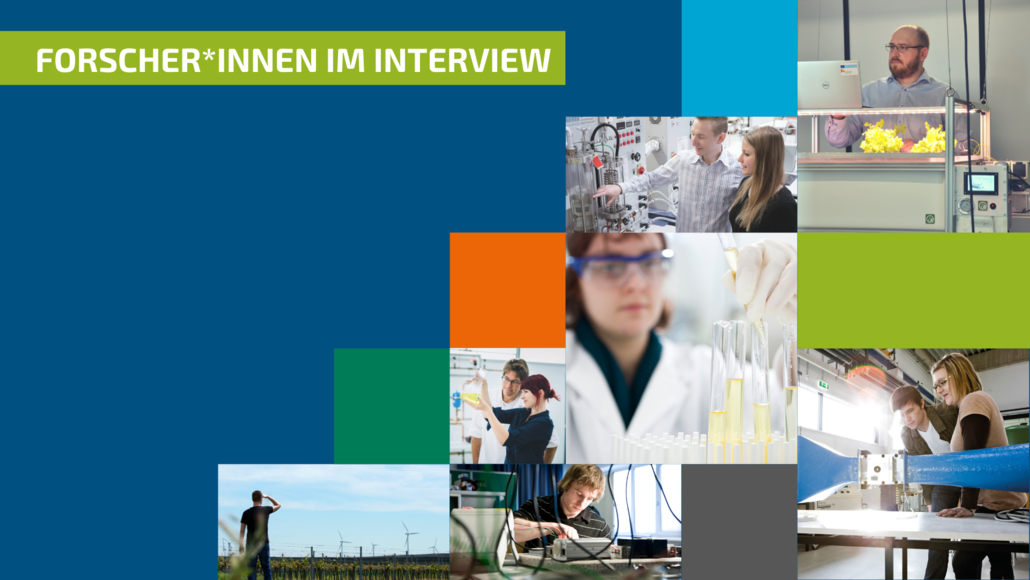
‘STEM subjects are practically a basic prerequisite for gaining a foothold in the applied research sector,’ explains Marcus Keding, Managing Director of Forschung Burgenland. He is positive about the future - despite corona.
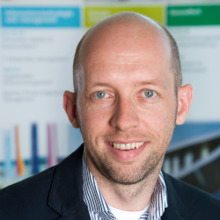
There will still be companies as clients. As a research company, we can make an important contribution to product development and problem solving.
Marcus Keding, Managing Director Research Burgenland
For Silvia Ettl-Huber, Vice Rector for Research and Innovation at the Burgenland University of Applied Sciences, a good collegial environment for the fear-free exchange of research results is one of the staples of a researcher's diet. ‘A good collegial environment also means that one's own performance can also be made visible,’ she emphasises. Young researchers can also learn from inspiring superiors - both professionally and in management. Despite all the challenges, both experts have a clear recommendation in favour of a career in research.
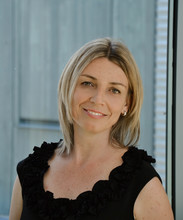
It is a versatile job in the sense that, in addition to thinking and measuring activities, management and practical contact are also required and expected.
Silvia Ettl-Huber, Vice Rector for Research and Innovation
There is simply no everyday life for researchers. But if we were to talk about it, it would look something like this: the young researcher develops an idea, usually together with colleagues. The idea becomes a project. A lot of energy is channelled into a project proposal. This is (usually) rejected. The process continues. :)
‘We at Forschung Burgenland have an extremely good rate when it comes to research applications,’ explains Forschung Burgenland Managing Director Marcus Keding. Nevertheless, at least three out of four submitted projects come to nothing. Tha's life. ‘Being a researcher is frustrating at first, but you get used to it,’ Keding reassures us.
Does it also happen that the research topic doesn't actually interest you that much? ‘The joy of the topic comes when something comes of it.’ Above all, teamwork and creativity are important for the job: ‘In our social space, it's sometimes like a creative workshop.’ Researchers are also expected to think abstractly and show a lot of initiative. The best place to start? Ideally writing your Bachelor's or Master's thesis in a research area.
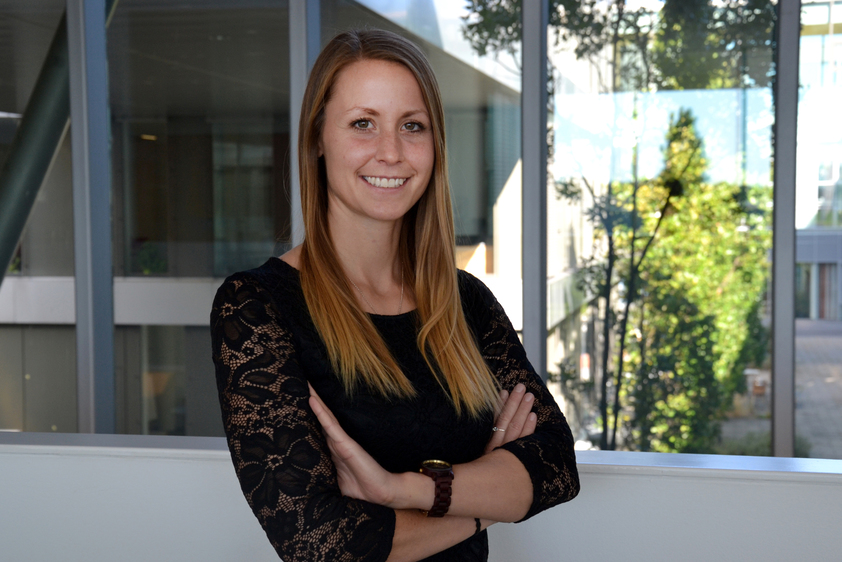
Julia Stöller works as a research assistant at Forschung Burgenland, mainly in health promotion projects. She is currently also involved in the Energy Transition research centre, where she is responsible for topics focusing on the environment and health.
When did you realise that you wanted to go into research?
Julia Stöller: I was lucky enough to have the opportunity to start as a research assistant after completing my Bachelor's degree.
Looking back, what was one of the most important milestones along the way?
Julia Stöller: I like the realisation that I can make a difference. Activities in which the general public or population groups are involved in research are particularly valuable to me. As a researcher, this gives you the opportunity to listen to people's voices and pass them on.
What particularly inspires you?
Julia Stöller: I am particularly enthusiastic about the opportunity for personal development in various research projects and the collaboration with researchers from different fields.
How do you deal with frustration when a project is not accepted, for example?
Julia Stöller: It is particularly helpful to talk about it with colleagues and build each other up. Especially at the beginning of a research career, it is difficult to demonstrate the often required project management experience and research career. The various funding bodies vary in how strict or accommodating they are here.
Do you have any recommendations for students who have similar career aspirations?
Julia Stöller: If you have discovered your career aspirations, it is particularly helpful to prove your skills in scientific work and to participate in ongoing research projects during your studies. This gives you the opportunity to get a taste of the work of a researcher and get to know potential future colleagues.
Markus Puchegger heads the ‘Energy Transition’ research area at Forschung Burgenland and focusses on technical, economic and social innovations for the energy transition in his projects. He studied for a Bachelor's degree in Energy and Environmental Management and a Master's degree in Sustainable Energy Systems at Burgenland University of Applied Sciences and is currently a doctoral student at Vienna University of Technology.
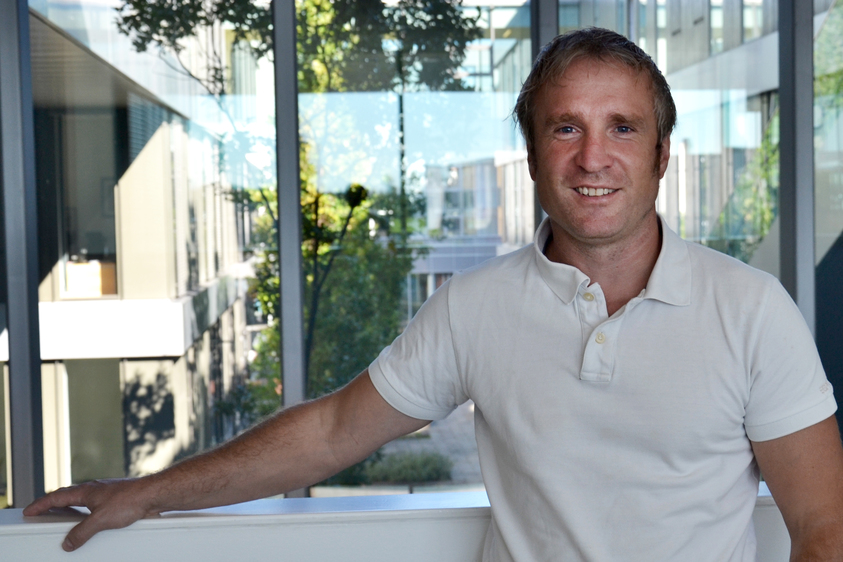
When did you realise that you wanted to go into research?
Markus Puchegger: I was already able to get a taste of research projects during my studies as a research assistant in the Department of Energy and Environmental Management and was also involved in project acquisition. The decision was made as soon as I had fun and success.
Looking back, what was one of the most important milestones along the way?
Markus Puchegger: There were several important milestones, but in addition to the initial project successes, the formation of the research group in the area of ‘Energy Transition’ should certainly be emphasised.
What are you particularly enthusiastic about?
Markus Puchegger: Having a job where you can develop freely and also do good in terms of the energy transition.
How do you deal with frustration when a project is not accepted, for example?
Markus Puchegger: In science, it is completely normal to learn from criticism and rejection. This applies to both publications and project applications. You have to take feedback on board, improve your ideas and try again.
Do you have any recommendations for students who have similar career aspirations?
Markus Puchegger: Despite the often-cited desire to specialise in certain things, I think it's essential to think outside the box and look at the big picture. This increases your understanding of interrelationships beyond your own specialism enormously, which in turn leads to new ideas and approaches.
# Gepostet in:
Career


