Better recycling of electronic waste - University of Applied Sciences Burgenland in search of project partners

Young woman works at the pyrolysis oven

The eWasteToMaterial approach is based on the targeted pyrolytic pre-treatment of e-waste.

Researchers at the Department of Energy & Environment in Pinkafeld are working on a new process for recycling electronic waste. The eWasteToMaterial project is funded by the FFG. Additional partner companies from the recycling or metal processing industry are currently being sought.

Pinkafeld, 2 December 2025. The University of Applied Sciences Burgenland is developing an innovative process to recover metals from electronic waste more efficiently, cleanly and economically for companies as part of the FFG "Research for the Economy" programme. The eWasteToMaterial project is running at the Pinkafeld campus and is looking for business partners from the recycling industry as well as metal processing and metal purchasing companies for tests, piloting and follow-up projects.

What's in electronic waste

Electronic waste is a valuable source of secondary raw materials: Mobile phones and circuit boards contain dozens of materials, including copper, precious metals and critical metals such as indium, gallium and germanium. Conventional recycling processes have not yet been able to optimally utilise the individual elements for reuse.

The eWasteToMaterial approach is based on targeted pyrolytic pre-treatment. This involves the controlled decomposition of the plastics in the e-waste and the resulting pyrolysis gases can be used to generate energy. The metals are then exposed in the solid residue and can be better separated physically and chemically. According to department head Christian Wartha, this method has several advantages.

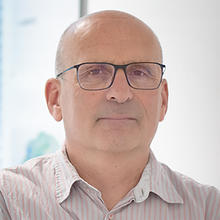
christian Wartha

The process we have developed enables us to reduce the volume of the materials to be treated. We need lower process temperatures and still achieve higher metal purities.

Christian Wartha, Head of the Department of Energy & Environment, University of Applied Sciences Burgenland

He and his team benefit from many years of experience in the field of pyrolysis processes.

Companies benefit from expertise and ideal test conditions

A laboratory facility and a pilot plant at the Pinkafeld university campus are available for the development and testing of the new process. In addition, a sorting technology will be integrated to enable clean separation of recycled metals. At the same time, ecological and economic assessments are also carried out in cooperation with the university's Department of Economics to provide business partners with useful information on costs, revenues and fields of application.

Companies are given access to test capacities, profitability analyses and options for piloting - right through to testing the system with their own materials. Business model innovations, such as rental and leasing models as well as purchase agreements for recovered metals, are also being considered.

"With eWasteToMaterial, we are closing gaps in the electronic waste recycling value chain. We are increasing yields, reducing energy and cleaning costs and making metals that were previously difficult to access available," says Wartha. Contact for companies interested in the project:

Christian Wartha │Head of the Department of Energy & Environment │ University of Applied Sciences Burgenland GmbH │ Tel: +43 (0)5 7705 4123 │ Email: christian.wartha(at)hochschule-burgenland.at


# Gepostet in:
News, Presse, Aktuelles