

Who is to blame for the food in the bin?
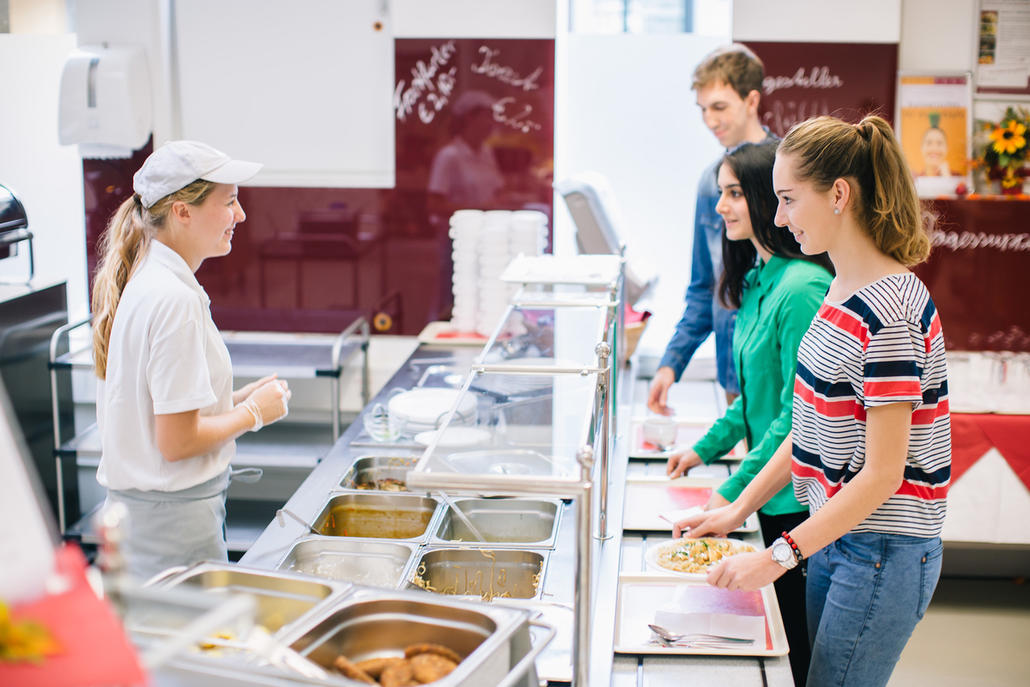
In Austria, 16% of food waste is produced in canteens and the catering industry.
Eisenstadt, 13 December 2023 - Production, trade, gastronomy, consumers or politics? Who is to blame for the 59 million tonnes of food that end up in the bin every year in the EU and 1.2 million tonnes in Austria? Patricia Szilágyi, a graduate of the European Studies - Management of EU projects master's programme at Burgenland University of Applied Sciences, interviewed representatives of the Ministry of Climate Action and the Ministry of Health, the EU Commission, the NGO United against waste, the Austrian Institute of Ecology and restaurateurs for her thesis.
Her research and findings briefly summarised:
- What is food waste? There are different explanations, some of which also diverge culturally. In Europe, for example, we don't eat all parts of an animal, whereas in other countries around the world this is quite common. In the EU, the term food waste is defined in the Waste Directive. Standardised measurement has only been in place since 2020. Data was presented for the first time in 2022. By the way: apple cleaning is considered unavoidable waste at home.
- Current situation: Across Europe, 53% of food waste is generated in private households, followed by 20% in processing, 11% in production, 9% in catering and 7% in retail.
- Cateringin Austria: It is astonishing that 16% of food waste in Austria is generated in the catering sector - significantly more than the EU average.
- The following measures can have a positive impact on the situation in the catering industry: redistribution (food donations for charitable purposes), changes in consumer behaviour (think more carefully when ordering or only put as much as you can eat on your plate at the buffet), improvement of supply chains, more regulations and laws to prevent food waste, waste recycling (animal feed, biomass).
- Challenges lie in the areas of: Overproduction, calculability (how many employees* will eat in the canteen today?), customer* wishes, expectations (rich assortment is desired), internal management in the companies, data basis, liability.
- This is the focus of the EU:
- Both Austria and the EU are currently focussing on providing or establishing platforms where the various stakeholders can exchange information and network on the topic. According to the author of the study, this is working and is being well received.
- Austria and the EU are also working on prioritising prevention measures and the reuse of leftover food. The consensus here is that this should be prioritised for consumption by people. Food donations are therefore at the top of the list of possible or desirable measures, while utilisation as animal feed is a less preferred option, but is still preferred to destruction.
- This is still necessary:
- Even more awareness-raising: the current training programmes are already being well received in all areas and are also increasingly in demand. The primary aim here is to sensitise consumers to the problem, but employees in catering establishments and retail should also be more involved.
- There are currently only a few measures and legal regulations in place to provide financial and operational support for the redistribution of surplus food. Who takes on the logistics and transport of food donations? "NGOs and catering businesses alike would like more support here," says the graduate. In terms of liability, the regulations also inhibit the motivation to donate food. "The food law and hygiene regulations are clearly defined, but they offer no particular incentive for the organisation donating and receiving the food.
Who can make a difference?
The idea is to get the ball rolling with support programmes, some of which already exist. "To be honest, however, it has to be said that the EU can only play a limited role in some aspects. The ball is in the court of the member states, which must become more active at national level," says Szilágyi. She came up with the idea of researching the topic through her personal professional experience in the catering sector. The 29-year-old tried to lead a zero-waste life herself for a while, but she is now very conscious of the issue of waste and food waste. To become active, she advises people to influence their personal environment and create awareness and points to the Greenpeace petition on the topic. She completed her studies in 2023 and is currently working in project management.
Facts about the Master's degree programme in European Studies - Management of EU Projects
This degree programme, which is unique in Europe, is aimed at anyone who wants to implement EU projects. The spectrum ranges from work in the administration, i.e. federal, state and local authorities, to companies, universities and other institutions. Degree - Master of Arts in Business - MA; organisational form: part-time, Friday 8.30 to 21.00 and Saturday 8.30 to 19.00 approximately fortnightly; number of study places: 26; place of study: Eisenstadt; language of instruction: English; no tuition fees.
You can find more information about the degree programmes at FH Burgenland at www.fh-burgenland.at. Registration is still possible until 31 May.
Further information:
Mag.a Christiane Staab
Marketing & Communication
Fachhochschule Burgenland GmbH
Tel: +43 (0)5 7705 3537
E-Mail: christiane.staab@hochschule-burgenland.at
# Gepostet in:
News,
Presse,
Aktuelles


