

I am excited by the realisation that no major load shifting is necessary to achieve the target. Even minor adjustments to user behaviour can reduce peak loads and relieve the grid.
Matthias Krammer, researcher at Forschung Burgenland

Nutzer*innen können durch kleine Änderungen einen positiven Beitrag leisten, zeigt eine Masterarbeit an der Hochschule Burgenland.
Pinkafeld, 19 August 2025. District heating systems are networks that supply buildings with heat for heating and hot water. In view of the climate crisis, the aim must be to operate these systems with renewable energies as far as possible. In order for this to work optimally, customers' heating requirements need to be made more flexible, according to the results of the simulation study by young researcher Matthias Krammer from Forschung Burgenland. The graduate of the Master's degree programme in Building Technology and Facility Management received the Future Talent Award from FMA - Facility Management Austria for his work.
The master's thesis investigates how the heating requirements of end customers can be made more flexible through time-dependent heat tariffs. Krammer developed two different tariffs for this purpose:
Which tariff is more suitable depends on the objectives of the district heating network: environmental friendliness or network stability.
The graduate developed a forecasting model based on weather data and historical consumption values and can use it to predict future heating requirements, so to speak. He ran over 300 simulations for each tariff and was surprised by his own results.
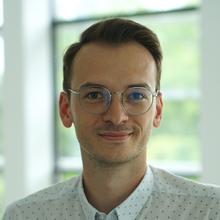
I am excited by the realisation that no major load shifting is necessary to achieve the target. Even minor adjustments to user behaviour can reduce peak loads and relieve the grid.
Matthias Krammer, researcher at Forschung Burgenland
"This reduces the use of fossil-fuelled peak-load boilers and allows existing, more sustainable systems to be used more efficiently. In this way, district heating networks can be expanded without the need for additional generation capacity."
Interested parties can contact Matthias Krammer by email.
Information and registration for a remaining place at www.hochschule-burgenland.at.
Enquiry notes:
Gianina Wallner, BA MA│ Marketing & Communication │ University of Applied Sciences Burgenland GmbH │ Tel: +43 (0)5 7705 4514 │ E-Mail: G ianina. Wallner@hochschule-burgenland.at
# Gepostet in:
News,
Presse,
Aktuelles


