
Discover your path to success - find the perfect degree programme for your future!
What does your business card say?
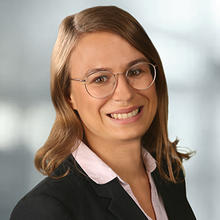
Programme Manager, ‘Healthy Workplace’
, ‘Tut gut!’ Health Prevention Ltd
What do you do in your job?
I’m responsible for the strategic direction, implementation and organisation of the ‘Healthy Workplace’ programme at ‘Tut gut!’ Gesundheitsvorsorge GmbH. We support organisations in implementing workplace health promotion in Lower Austria, with the aim of maintaining and improving people’s health awareness and ability to work within their organisations.
What’s the best thing about your job?
Working with a great team and driving forward workplace health promotion in Lower Austria together.

The highlight of my degree was …
Particularly worth highlighting is the holistic understanding of health that I was able to develop during my degree. At the same time, I gained in-depth insights into business operations – valuable knowledge that effectively combines theory and practice.
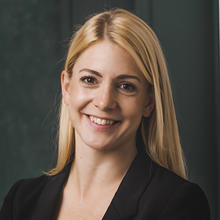
What does your business card say?
Tina Carina Wellmann, MA
Digital Marketing & Social Media at Instahelp
What do you do in your job?
My job is to create content for social media channels, post it and analyse it afterwards. It’s important to always stay up to date. I also get involved in various collaborations and projects. So, it’s very varied and exciting. :)
What’s the coolest thing about your job?
The best thing is my team and what Instahelp stands for: I love the ‘start-up vibe’ and the fact that our service provides easy access to psychological counselling. Society and the healthcare system need this.

The highlight of my degree was…
My work placement: Combining theory with practice was a real eye-opener for me in many areas. What’s more, I was taken on straight away afterwards and was able to develop both personally and professionally over the course of just under 4½ years.
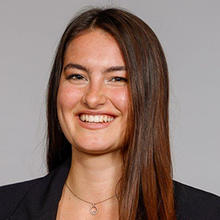
What does your business card say?
Head of Human Resources
What do you do in your job?
I support our staff in various professional situations, recruit new staff, and handle employment-related matters, as well as much more.
What’s the best thing about your job?
I get to work with people.

The highlight of my degree was…
The absolute highlight was my work placement. The wide variety of lectures gave me a broad insight into working life.
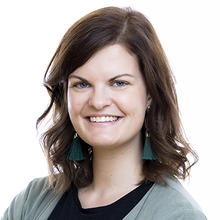
What does your business card say?
Health and Performance Management Officer at Steiermärkische Sparkasse
What do you do in your job?
Planning, implementing and evaluating workplace health promotion initiatives in the form of talks, workshops and seminars, sports programmes and one-to-one consultations, such as massages and osteopathy.
Our aim is to use these measures to strengthen all employees’ personal responsibility for their own health in the long term and, as a result, to increase staff satisfaction.
What’s the best thing about your job?
Working with people at all levels of the company, the boundless creativity, and the end result: happy and satisfied staff.

The highlight of my degree was…
I particularly loved the fact that there were so many guest lecturers with practical experience, some of whom I still work with today.
The friendly, family-like atmosphere on campus was immediately apparent, and I’ll always remember the Christmas sessions with Prof. Mayer.
What does your business card say?
Head of Controlling and HIS Application Management
, Rudolfinerhaus Privatklinik GmbH
What do you do in your job?
I am primarily responsible for internal and external reporting, medical documentation and all controlling activities. My main tasks include preparing the annual accounts, budgeting, organising strategy meetings and advising senior management. I’m also responsible for further developing and automating our reporting processes, digitising hospital processes and managing our hospital information system.
What’s the best thing about your job?
The incredibly varied work, which presents a new challenge every day, alongside my outstanding team in a hospital that offers top-class medical and nursing care.

The highlight of my degree was…
The fact that Burgenland University of Applied Sciences didn’t just teach textbook knowledge, but also gave people in key positions the opportunity to share insights from their many years of practical experience. I’m still in touch with some of the lecturers and enjoy discussing current topics with them.
What does your business card say?
Digital Student, Medical Affairs at MSD Austria (international pharmaceutical company)
What do you do in your job?
My responsibilities include compiling medical study results and information materials for doctors and patients, as well as managing an information and training website for experts. I also carry out design work on the layout of materials and support medical advisors at expert meetings on clinical trials.
What’s the best thing about your job?
The best thing about my job is the opportunity to work in an incredibly great, agile and motivating environment and to make a significant contribution, together, to tackling health issues.

The highlight of my degree was…
The highlight of my degree was combining the principles of a holistic approach to health with elements of human biology and pharmacy, as well as gaining a deeper insight into Austria’s hospital landscape and healthcare system.
What does your business card say?
Florentina Sgarz, MA
Content Manager
OMNIi-Talk podcast
What do you do in your job?
I work in digital marketing as a content manager, which covers the following areas: website, blog, podcast, influencer marketing, photo shoots and trend analysis.
The podcast has now become my main responsibility, where I’m in charge of everything from content creation and recording to editing and publishing online.
I really enjoy it and I’m so grateful to have been given this opportunity!
What’s the coolest thing about your job?
Working with influencers and, without a doubt, the podcast.

The highlight of my degree was…
The best thing about this degree was that we learnt a great deal about the human body, whilst also gaining an understanding of the business aspects of a company.
I use the knowledge I gained very often in my work, and it was a real asset when I applied to the AllergoSan Institute.
What does your business card say?
eLearning Coordinator
What do you do in your job?
At Steiermärkische Krankenanstaltenges.m.b.H., I’m responsible for e-learning within the HR development department. This covers the whole process, from brainstorming ideas, through the didactic design and production of e-learning modules, right through to roll-out, reporting and marketing activities.
What’s the coolest thing about your job?
That I get to use creative and engaging e-learning modules to help convey even the less exciting topics to our staff.

The highlight of my degree was…
The broad insight into the healthcare system and into healthcare and hospital facilities provides an excellent foundation for many career paths. I also really appreciated the friendly atmosphere and the practical relevance of the course.
Special Stories
You can find more stories about notable graduates, students, lecturers and staff from this degree programme here and on our blog.
Heat in everyday life: When summer becomes a burden
In our 30th podcast episode, four students from the Bachelor’s degree programme in Health Management and Health Promotion – Emily Wachtler, Annika Baronyay, Christina Friessnegg and Anita Randjelovic – discuss a topic that affects us all: How a sustainable diet can help in the heat and how we can get through the hot summer days in a healthy and climate-friendly way
The podcast is available on Spotify, Apple Podcasts and other popular platforms.
Heatwaves are no longer an exceptional phenomenon, but a recurring reality – in cities and at universities. In the podcast episode ‘Hot Days’, four female students from Burgenland University of Applied Sciences discuss how rising temperatures are affecting their everyday lives, including their studies. What sounds trivial at first – a hot summer’s day in a seminar – turns out, as the conversation unfolds, to be a complex problem with social, health and infrastructural dimensions.
The episode begins with personal experiences: what does it feel like when the sun is beating down, and how do individual experiences differ when the air is still? The students talk about everything from circulatory problems to difficulties concentrating – and explain exactly what strategies they have developed for themselves.
Here are several perspectives:
- Health aspects: The students highlight health risks, particularly for vulnerable groups – such as older people and children.
- Social circumstances: Heat is described as a ‘factor that exacerbates inequality’: those living in a poorly insulated flat in the city experience the summer differently from their more privileged fellow students who live in the cooler parts of Austria.
The podcast stands out for its authenticity and relevance: drawing on specific everyday experiences, the students highlight just how deeply climate change is already affecting everyday life at university – and that it is not just about the natural sciences, but also about social impacts.
The podcast episode ‘Hot Days’ vividly illustrates how the climate crisis has reached the university – not as a theoretical topic, but as a reality that can be physically experienced. The students’ contribution provides an important impetus to take the heat seriously and to develop sufficient resources to combat it.
Behind the scenes

Students on the Bachelor’s degree programme in Health Management and Health Promotion recorded the podcast at the media centre on the Pinkafeld campus. They were clearly enjoying themselves :-)
P.S.: For anyone still interested in this topic: our hard-working students have produced two more videos on this subject. They’re well worth a watch!
Video 1: Food systems as factors influencing climate change – causes, effects and potential solutions. Produced by our students Jessica Bauer and Sarah Duschanek. Click here to watch the video.
Video 2: Nutrition in hot weather – general information, risks and practical tips. Produced by our students Katharina Lederer and Maximilian Pichelbauer. Watch the video here.
Guest contribution: Emily Wachtler, Annika Baronyay, Christina Friessnegg and Anita Randjelovic –
– Bachelor’s students in Health Management and Health Promotion
# Gepostet in:
Gesundheit,
Blog,
Podcast,
Bachelorstudiengang Gesundheitsmanagement und Gesundheitsförderung