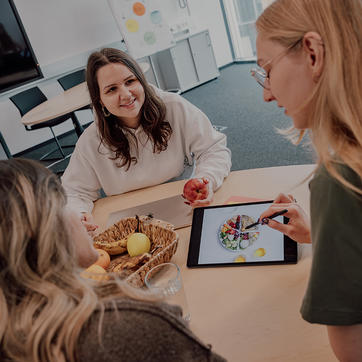
The highlight of my degree was …
Particularly worth highlighting is the holistic understanding of health that I was able to develop during my degree. At the same time, I gained in-depth insights into business operations – valuable knowledge that effectively combines theory and practice.
What does your business card say?
Programme Manager, ‘Healthy Workplace’
, ‘Tut gut!’ Health Prevention Ltd
What do you do in your job?
I’m responsible for the strategic direction, implementation and organisation of the ‘Healthy Workplace’ programme at ‘Tut gut!’ Gesundheitsvorsorge GmbH. We support organisations in implementing workplace health promotion in Lower Austria, with the aim of maintaining and improving people’s health awareness and ability to work within their organisations.
What’s the best thing about your job?
Working with a great team and driving forward workplace health promotion in Lower Austria together.

What does your business card say?
Tina Carina Wellmann, MA
Digital Marketing & Social Media at Instahelp
What do you do in your job?
My job is to create content for social media channels, post it and analyse it afterwards. It’s important to always stay up to date. I also get involved in various collaborations and projects. So, it’s very varied and exciting. :)
What’s the coolest thing about your job?
The best thing is my team and what Instahelp stands for: I love the ‘start-up vibe’ and the fact that our service provides easy access to psychological counselling. Society and the healthcare system need this.
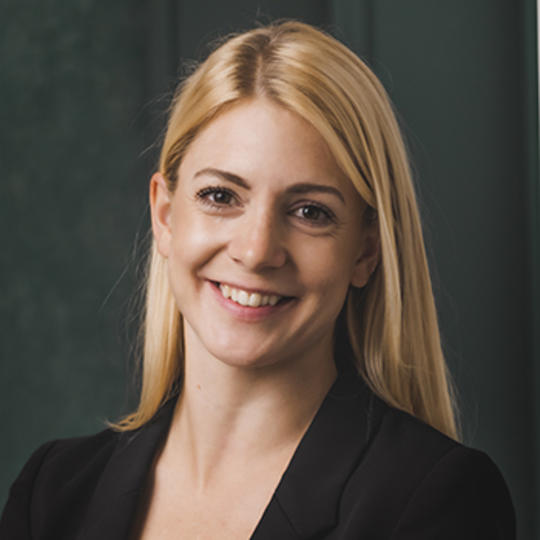
The highlight of my degree was…
My work placement: Combining theory with practice was a real eye-opener for me in many areas. What’s more, I was taken on straight away afterwards and was able to develop both personally and professionally over the course of just under 4½ years.
What does your business card say?
Head of Human Resources
What do you do in your job?
I support our staff in various professional situations, recruit new staff, and handle employment-related matters, as well as much more.
What’s the best thing about your job?
I get to work with people.

The highlight of my degree was…
The absolute highlight was my work placement. The wide variety of lectures gave me a broad insight into working life.
What does your business card say?
Health and Performance Management Officer at Steiermärkische Sparkasse
What do you do in your job?
Planning, implementing and evaluating workplace health promotion initiatives in the form of talks, workshops and seminars, sports programmes and one-to-one consultations, such as massages and osteopathy.
Our aim is to use these measures to strengthen all employees’ personal responsibility for their own health in the long term and, as a result, to increase staff satisfaction.
What’s the best thing about your job?
Working with people at all levels of the company, the boundless creativity, and the end result: happy and satisfied staff.

The highlight of my degree was…
I particularly loved the fact that there were so many guest lecturers with practical experience, some of whom I still work with today.
The friendly, family-like atmosphere on campus was immediately apparent, and I’ll always remember the Christmas sessions with Prof. Mayer.
What does your business card say?
Head of Controlling and HIS Application Management
, Rudolfinerhaus Privatklinik GmbH
What do you do in your job?
I am primarily responsible for internal and external reporting, medical documentation and all controlling activities. My main tasks include preparing the annual accounts, budgeting, organising strategy meetings and advising senior management. I’m also responsible for further developing and automating our reporting processes, digitising hospital processes and managing our hospital information system.
What’s the best thing about your job?
The incredibly varied work, which presents a new challenge every day, alongside my outstanding team in a hospital that offers top-class medical and nursing care.

The highlight of my degree was…
The fact that Burgenland University of Applied Sciences didn’t just teach textbook knowledge, but also gave people in key positions the opportunity to share insights from their many years of practical experience. I’m still in touch with some of the lecturers and enjoy discussing current topics with them.
What does your business card say?
Digital Student, Medical Affairs at MSD Austria (international pharmaceutical company)
What do you do in your job?
My responsibilities include compiling medical study results and information materials for doctors and patients, as well as managing an information and training website for experts. I also carry out design work on the layout of materials and support medical advisors at expert meetings on clinical trials.
What’s the best thing about your job?
The best thing about my job is the opportunity to work in an incredibly great, agile and motivating environment and to make a significant contribution, together, to tackling health issues.

The highlight of my degree was…
The highlight of my degree was combining the principles of a holistic approach to health with elements of human biology and pharmacy, as well as gaining a deeper insight into Austria’s hospital landscape and healthcare system.
What does your business card say?
Florentina Sgarz, MA
Content Manager
OMNIi-Talk podcast
What do you do in your job?
I work in digital marketing as a content manager, which covers the following areas: website, blog, podcast, influencer marketing, photo shoots and trend analysis.
The podcast has now become my main responsibility, where I’m in charge of everything from content creation and recording to editing and publishing online.
I really enjoy it and I’m so grateful to have been given this opportunity!
What’s the coolest thing about your job?
Working with influencers and, without a doubt, the podcast.

The highlight of my degree was…
The best thing about this degree was that we learnt a great deal about the human body, whilst also gaining an understanding of the business aspects of a company.
I use the knowledge I gained very often in my work, and it was a real asset when I applied to the AllergoSan Institute.
What does your business card say?
eLearning Coordinator
What do you do in your job?
At Steiermärkische Krankenanstaltenges.m.b.H., I’m responsible for e-learning within the HR development department. This covers the whole process, from brainstorming ideas, through the didactic design and production of e-learning modules, right through to roll-out, reporting and marketing activities.
What’s the coolest thing about your job?
That I get to use creative and engaging e-learning modules to help convey even the less exciting topics to our staff.

The highlight of my degree was…
The broad insight into the healthcare system and into healthcare and hospital facilities provides an excellent foundation for many career paths. I also really appreciated the friendly atmosphere and the practical relevance of the course.
Special Stories
You can find more stories about notable graduates, students, lecturers and staff from this degree programme here and on our blog.
Mental health during your studies: you are not alone!

We think so: That has to change. The online platform Instahelp shows how this can be achieved in the future. It offers low-threshold, location-independent, confidential and, above all, rapid psychological counselling for those affected.
Our graduate Tina Carina Wellman works in Digital Marketing & Social Media at the Styrian start-up. She completed a Bachelor's degree in Health Management and Health Promotion at the Burgenland University of Applied Sciences as well as the former Master's degree in Health Management and is now actively campaigning for the removal of taboos surrounding mental health. You can find the study by Instahelp and Studo here.
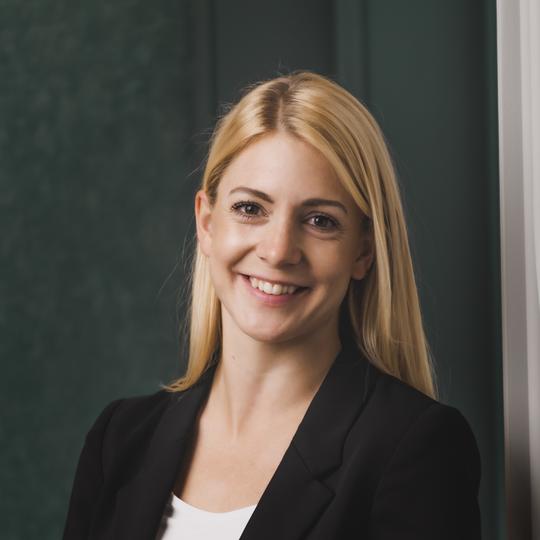
There will be a paradigm shift in which mental health will become just as important as physical health. It will become a lifestyle factor to go to a psychologist. For digital natives in particular, it will be so important to be able to start counselling quickly and easily.
Tina Carina Wellmann, graduate of the Department of Health
It's particularly important to get help quickly when you're mentally unwell. Do you think that the Instahelp digital platform is a step in the right direction in this respect?
Tina: Yes, I definitely think so. Instahelp offers low-threshold access to psychological counselling online and in a timely manner. There are people who have been struggling for a long time with whether they should seek psychological counselling and wait until the level of suffering is very high. But then, when help is urgently needed, those affected usually have to wait several weeks or even months for an appointment at a local counselling centre.
The great advantage of Instahelp is that the psychologists get in touch within 24 hours to arrange an appointment. The initial consultation usually takes place within a week. The online service is also flexible and can be used at a time that suits you. Counselling sessions also take place at the weekend and in the evening. This means that those affected don't have to travel to a local practice and search for a parking space and can easily integrate psychological counselling into their everyday life alongside their studies, job, hobbies, family, etc.
Instahelp also cooperates with major insurance companies such as Allianz and Merkur Versicherung. Insured persons benefit from a free quota of psychological counselling online at Instahelp.
Can this digital exchange replace face-to-face counselling? Especially when it comes to digital natives or young people who have grown up with the digital world?
Tina: The question here is not whether one replaces the other - it's more about the willingness of those affected. Whether digital natives or baby boomers, the effectiveness of psychological help is not determined by the setting, i.e. whether it takes place online or offline, but by the willingness to change and the relationship between the person seeking help and the psychologist (Icahn School of Medicine at Mount Sinai, 2012).
Jasmin: Psychological counselling online at Instahelp is based exclusively on personal communication with a clinical and health psychologist with at least three years of experience and university training in online counselling. The advantages of digitalisation make the platform so innovative and exciting! Counselling can be used regardless of location, even anonymously if required. Users can choose between video, audio or text chat - we are geared towards all needs to take the first step towards counselling on issues relating to mental well-being.
It makes the step of seeking help much easier when it can be done easily from the comfort of your living room couch with just a few clicks. Due to the low-threshold access, we are also noticing a change in the gender distribution of our customers. We are pleased that we are attracting more and more men as customers for counselling.
Have you noticed a rethink among students and young people regarding the importance of mental health?
Jasmin: The number of students who took part in the Mental Health Barometer alone showed us that they are thinking very intensively about the topic of mental health. We received over 8,400 responses. Unfortunately, more than half of the participants described their mental health as less good to poor. The awareness of personal health is definitely there and the desire for more balance and time for one's own needs is great.
Do you have any tips on how to break the taboo subject in everyday student life?
Tina: I can still remember my student days very well: I was sitting in a lecture theatre and had no idea exactly what the lecturer meant because I didn't understand some of the foreign words. That really stressed me out and I didn't feel well mentally. I didn't dare to ask the lecturer or my fellow students. Everyone seemed to know exactly what was meant. That really hurt my self-esteem. In later semesters, we talked about the start of our degree programme and realised that there were quite a few students who didn't understand a lot of things in this particular lecture. If we had talked about it straight away, it would certainly have been easier for all of us.
What I'm trying to say is that open communication is very important: mutual understanding and acceptance are also key factors that contribute to removing taboos. Universities of applied sciences and universities need to create the right framework conditions to promote and strengthen students' mental health.
Now the cost factor is - rightly - still a hurdle for many young people when it comes to taking the step towards professional support. That's why I'm going back further: what do you think people can do in advance to strengthen their mental health in everyday life?
Tina: Fortunately, there are a few things that everyone can do preventively. There are three main areas that influence our mental health: Our mindset, our behaviour and our social contacts. Taking this knowledge into account, everyone can consider for themselves what they can do in which area.
Here are some examples:
- Mindset: Emphasise feelings rather than suppress them, focus on the positive
- Behaviour: Create routines, consciously use relaxation phases, set achievable goals
- Social contacts: Plan meetings with friends or family, exchange ideas via phone calls
In addition to great apps, there are also some social media sites that already offer high-quality content on mental health. We at Instahelp also regularly publish posts and reels on our Instagram account. Feel free to stop by and follow us. It's definitely worth it.
The step towards external help - i.e. support from a psychologist - is also an act of self-care. When should you take the step from self-help to external help?
Jasmin: In principle, it's never too early to seek outside help. Above all, however, it would be advisable as soon as we realise that an issue has been bothering us intensively for more than two weeks, that our thoughts are constantly revolving around this situation and that we may already be experiencing difficulty falling asleep or sleeping through the night, increased irritability or even listlessness in everyday life. It is comparable to going to the doctor when we feel physically ill and ailing. We are usually not afraid to do this. It would be desirable to see the step towards psychological (online) counselling as a natural support and as an added value to improve our quality of life.
Would you like to briefly describe how you felt about your degree programme at FH Burgenland and what it has given you for your future career?
Tina: For me, my Bachelor's degree programme was very formative for my future professional and personal career. I was able to use a lot of what I learnt during my studies for myself personally, for example from the lectures on coaching, communication and health sports. As many of the lecturers come directly from the field, they provided good insights and tips that I was able to put to good use.
I went straight into the healthcare sector during my internship and stayed. I found my passion here in marketing. The content of my degree programme was very relevant. After all, marketing in the healthcare sector requires a basic knowledge of the Austrian healthcare system. As I started out working specifically in hospital marketing, I was able to benefit greatly from lectures such as hospital management. Healthcare and marketing are two particularly exciting fields and combining them makes it all the more exciting.
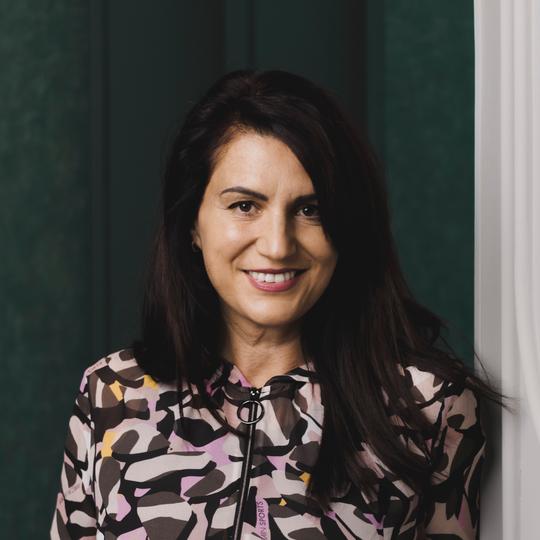
In principle, it can be said that it is never too early to seek outside help. Above all, however, it would be advisable as soon as we realise that an issue has been bothering us intensely for more than two weeks and our thoughts are constantly revolving around this situation.
Jasmin Sadeghian, Clinical and Health Psychologist Instahelp
We at FH Burgenland want you as a student to know: You are not alone with your problems. Your well-being is important to us! If you feel like you're in over your head, don't keep it to yourself: talk about it with friends or family. Even seeking psychological counselling is not a sign of weakness and can take a lot of weight off your shoulders. In addition to Instahelp, another point of contact for psychological stress and problems is, for example, Austria's psychological student counselling service.
Since March 2023, we have also been focusing even more intensively on the mental health of our students in the "Studo-Fit" project at FH Burgenland. Click here for the Studo-Fit information platform . If you want to do something preventive for your own mental health, you should listen to the podcast episode with our lecturer of the Bachelor of Health Management and Health Promotion Barbara Szabo.
# Gepostet in:
Tips for students
Back
Teilen: