


"Our graduates can use their knowledge in the field of IT infrastructure to find new solutions."
Christian Büll, Programme Director
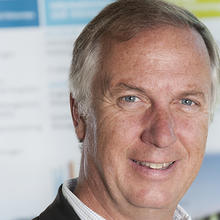
"Our graduates can use their knowledge in the field of IT infrastructure to find new solutions."
Christian Büll, Programme Director
Bachelor's degree programme - 6 semesters
Computer science degree with focus on IT infrastructures
Bachelor of Science in Engineering - BSc or B.Sc.
full-time*
50
UAS Study Centre in Eisenstadt
German (required language level B2, C1 desirable), individual courses can also be held in English (required language level at least B2).
None
*full-time: Monday-Friday
**part-time: At the study center, typically every other week on Fridays from 2:00 p.m. to 9:00 p.m. and Saturdays from 8:30 a.m. to 5:15 p.m; additionally, two in-person blocks per semester from Thursday to Saturday full-day
Online component: 30%
The work placement for full-time students lasts a total of 15 weeks, which students can choose to complete in the 5th semester and/or 6th semester. The work placement rounds off the practice-oriented training of the degree programme.
Students are required to take the initiative when looking for companies for the work placement; our support is a matter of course. The tools for a successful application - social skills, career planning, assessments, etc. - are trained in previous semesters. Commitment during the work placement often also means a job offer after graduation.
For a Bachelor's degree programme at our organisation, you meet one of the following requirements:
DETAILS ADMISSION REQUIREMENTS BACHELOR IT INFRASTRUCTURE MANAGEMENT
The University of Applied Sciences Bachelor's Programme IT Infrastructure Management accepts 50 applicants per year.
Application deadline: 31 March - to see whether an application is still possible after this date, click HERE.
Applications received by the deadline for the Bachelor's degree programme in IT Infrastructure Management will be considered in the admission procedure for the coming academic year. Registration takes place via the online registration.
Personal admission interview
The admission interviews (individual appointments) take place from March onwards. The contents of the admission interview range from the subject area of previous education and personal access to the Bachelor's degree programme at the University of Applied Sciences to any existing professional experience and future professional expectations of the applicants.
Decision on admission
The applicants are assessed, ranked and notified of their admission. Applicants without a firm acceptance will be placed on a waiting list and will be moved up in the case of non-admitted applicants. Applications that are submitted late can only be considered if there are free places.
Deposit
After the binding allocation of a place, University of Applied Sciences Burgenland collects a deposit of € 350 from students to secure their place. This deposit is refunded to active students after the end of the first semester. If an applicant does not fulfil the admission requirements before the start of the programme (e.g. did not pass the resit of the school-leaving examination, did not pass the additional qualification examination, etc.), the deposit is also refunded. In all other cases, the deposit is forfeited.
Graduates work in companies of all sizes that set up, operate and maintain IT infrastructures.
In job advertisements, you will also find the following job descriptions in the relevant fields: design and implementation of IT infrastructures ( IT infrastructure project manager, ICT planning engineer), specialist information technology departments ( ICT and network manager, IT quality manager, IT security officer), IT services ( IT Consultant, IT Service Officer), sales and marketing, training and support ( Help Desk Manager).
The following three occupations are representative of many other professional fields:

IT infrastructure planners develop and implement modern IT solutions for businesses. They analyse requirements, design network and server architectures, and implement complex IT projects – from the initial concept through to commissioning. In doing so, they work with the latest technologies and ensure that IT systems operate reliably, scalably and securely. Their work forms the backbone of the digital business world.

IT security officers are responsible for protecting sensitive data and systems. They analyse potential security risks, develop protective measures and implement security strategies. In an age of growing cyber threats, they ensure that IT infrastructures are well-equipped to withstand attacks – thereby enabling businesses to operate reliably. They work closely with IT teams, senior management and external partners.

IT Service Managers coordinate IT support within organisations and ensure that all systems run smoothly. They lead teams, improve helpdesk processes and ensure that technical problems are resolved quickly. In doing so, they maintain close contact with users and ensure a high standard of service. Whether working in an in-house IT department or for external service providers, their work keeps the business running.
You can find a few examples of successful graduates under Alumni, Projects, Stories.
INFORMATION TECHNOLOGY
ECONOMY
ENERGY & ENVIRONMENT
We will be happy to advise you and help you choose the appropriate degree programme. Be well informed to make the right decision.

Infoline: Mon-Fri 8 a.m. - 4 p.m.


