The Bachelor's degree program aims to train competent physiotherapists who apply the latest scientific findings in their work with patients and clients.

This is the right course for you if you can imagine working with patients and clients in prevention, therapy and rehabilitation, health counseling and education.

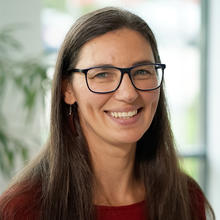
"Our Bachelor's degree programme in Physiotherapy combines sound scientific knowledge with practical training and innovative digital teaching methods to prepare you optimally for your work in rehabilitation, prevention and health promotion."

Marlene Szupper, Programme Director

Programme fact file

Degree programme

Bachelor's degree programme - 6 semesters
 

Academic degree

Bachelor of Science in Health Studies (BSc) and professional qualification as a physiotherapist

Programme structure

Full-time (Monday - Friday, occasionally Monday - Saturday)

Available study places

40

Study location

UAS Study Centre in Pinkafeld, practical facilities


Language of tuition

German (required language level at least B2), individual courses are held in English (required language level at least B2)

Tuition fees

None

Would you like to know more?

Bachelor's degree programme Physiotherapy

Browse folder

Online advisory sessions

Individual online consultation appointments by arrangement at

beratung(at)hochschule-burgenland.at

The University of Applied Sciences Bachelor's degree programme in Physiotherapy accepts 40 applicants.

Application deadline: March 31

Only applications received within the specified deadline will be considered in the admission procedure for the coming academic year. The application is made via the Online-Application.


Multi-stage admission procedure:

1. written ranking test: Moodle test at Campus Pinkafeld (01., 02. and 09.04.2026)*

2. practically oriented, job-specific aptitude test: in small groups at the study center in Pinkafeld (27.04. - 30.04.2026, 04.05.2026)*

3. Admission interview: 10. - 12.06 and 15. - 16.06.2026*

*Dates are allocated and are not freely selectable

Subject to change

In the case of multiple applications for the Occupational Therapy, Speech Therapy and Physiotherapy degree programmes, the Moodle test only needs to be taken once. 


Information on the admission procedure:

1. Written test

This is a written aptitude test that tests general central intellectual and specific medical-physiotherapeutic skills. Questions from the following categories are asked with regard to the requirements of the degree course and future physiotherapy work:

  • Language comprehension/expression (German and English)
  • Logical and networked thinking
  • Numeracy
  • Concentration and memory skills
  • Spatial imagination
  • General health-related knowledge
  • Ability to make decisions in certain situations with patients

You can find examples of possible contents of the areas in relevant literature on the subject of test and applicant training (Internet search terms: study ability tests, intelligence test, cognitive performance test, etc.).

Examples of test trainers:

  • Guth, K. & Mery, M. (2017). Test trainer for all types of recruitment tests, aptitude tests and job aptitude tests: Suitable for training, work and study. Ausbildungspark Verlag.
  • Hesse, J. & Schrader, H.-C. (2011). Logic test training. Passing aptitude and recruitment tests with confidence. Stark Verlag.

The invitation to the two further stages of the admission procedure requires successful completion of the first stage. The UAS Burgenland will inform you by e-mail no later than 2 weeks after you have completed the written test whether you have been invited to the further admission procedure or not. No information will be given by telephone.

2a. Practical, job-specific aptitude test

This is a practical aptitude test to check your job-specific and physical aptitude. The following skills and abilities are assessed at several stations:

  • Observation skills
  • Manual dexterity
  • Motor learning and coordination skills
  • Empathy
  • Dealing with certain therapy situations
  • Ability to work in a team


2b Admission interview

In the form of an interview, a first impression of your aptitude for the course and profession should be gained. The content of the interview may relate to your career and study motivation, CV and training, ability to reflect and perform, ability to work in a team.

Your written application documents (letter of motivation, curriculum vitae, form of application, professional experience, internships, etc.) are also decisive for your ranking in the admission procedure.

Decision on admission

Applicants are assessed according to a points system and informed by e-mail whether or not they have been offered a place. Applicants without a firm acceptance will be placed on a waiting list.

Applicants must confirm or decline their place at the university by email no later than two weeks after receiving their offer, otherwise applicants from the waiting list will move up. Information on the ranking or a possible place on the waiting list will not be given by telephone.

Deposit

After the binding allocation of a place, University of Applied Sciences Burgenland collects a deposit of € 350 from students to secure their place. This deposit is refunded to active students after the end of the first semester. If an applicant does not fulfil the admission requirements before the start of the programme (e.g. did not pass the resit of the school-leaving examination, did not pass the additional qualification examination, etc.), the deposit is also refunded. In all other cases, the deposit is forfeited.

Vaccination recommendations of the Federal Ministry of Social Affairs, Health, Care and Consumer Protection

According to these recommendations, it is necessary for all persons working in the clinical field to provide proof of immunity against Covid-19, hepatitis B, measles, mumps, rubella (MMR) and varicella (chickenpox).

The entire immunization process must be completed before the start of the first internship and documented in the vaccination certificate.

Vaccinations for healthcare staff

Highlights of this degree programme

  • Double degree: In addition to the academic degree, graduates also have a professional qualification as a physiotherapist
  • Graduates have a wide range of applications on the job market in all medical and preventative areas
  • High proportion of practical training: you will spend a third of your training in a total of seven internships at different healthcare facilities in various specialist areas
  • optimal group size that enables individual support for students
  • interactive exchange with other degree programs in the Department of Health

Career opportunities

Graduates work as employees in the inpatient and outpatient sectors of the health and social care services, in hospitals, rehabilitation clinics and centres, health resorts, care homes for the elderly, centres for people with disabilities, hospices, as well as in sports and preventive medicine facilities, health promotion and preventive care centres, gyms, wellness centres, thermal spas, sports clubs, and also as self-employed professionals in private practice.

The following examples are representative of many other professional fields:

Rehabilitation/Therapy
Physiotherapists help people regain their mobility following injuries, operations or illnesses. Through targeted exercises, manual techniques and personalised treatment plans, they improve mobility, strength and coordination, and help patients regain the ability to manage their daily lives independently. Their aim: greater independence and a zest for life through movement.

Prevention and health promotion
This is where physiotherapists step in at the very start of the health journey, before pain or limitations arise. In sports and preventive medicine facilities, such as gyms or sports clubs, they lead targeted training sessions, offer advice on ergonomics or develop exercise programmes. They are also actively involved in promoting healthy lifestyles in schools, workplaces and local communities.

Teaching and Research
Physiotherapists pass on their knowledge and drive innovation. They train future therapists, develop new treatment approaches and conduct research into topics such as pain management, digitalisation in therapy and interdisciplinary care. At universities or in research projects, they help ensure that physiotherapy remains evidence-based, modern and patient-centred.

Do you have more questions?

We will be happy to advise you and help you choose the appropriate degree programme. Be well informed to make the right decision.

Laura Baliga | Advisory service